Welcome to The Purl Bee!

At The Purl Bee we strive to create fun and approachable projects for you to knit, crochet, sew, stitch and more!   You can search for our past projects below by typing your search into the search box, browsing our Photo Galleries, looking through our Projects alphabetically or by clicking the links in our Tag Cloud. Enjoy!

Search The Purl Bee
Our Photo Galleries
Sewing Photo Galleries, Projects + Tutorials
Knitting Photo Galleries, Projects + Tutorials
Alchemy Yarns Alexander Henry Fabric Amy Butler Anna Maria Horner Anzula Appletons Applique Aprons Ask Purl Bee Babies Bags Bijou Basin Ranch Blankets Blue Sky Alpaca Boys Brooklyn Tweed Carr Textiles Cascade Yarn Charley Harper Christmas Classes Color Colorful Crafting with Jen Cotton Webbing Cowls Craft for Charity Crafts Crewel Crochet Cross-Stitch Denyse Schmidt DMC Embroidery Floss Echino Fabric Elizabeth Zimmermann Embroidery Euroflax Fabric Farmhouse Yarn Felt Felted Wool Felting Fiber Fingerless Gloves Friends of Purl Friendship Bracelets Gifts Girls Globalweave Gumnut Habu Textiles Hana Ami Flower Loom Hand Jive Yarns Hand Quilting Hats Heather Ross Holiday Projects Home Jade Sapphire Japanese Crafting with Mari Jared Flood JIllian Tamaki Kelbourne Woolens Kits Knit Collage Knitting Knitting at KNoon Kobayashi Fabric Koigu Yarn Kokka Fabrics Kona Cotton Laura Normandin Laura's Loop Lecien Fabric Leg Warmers Lena Corwin Liberty of London Linen Lisette Patterns Lobster Pot Yarn Lorna's Laces Lotta Jansdotter Louet Yarn Lynne Barr Macrame Madeline Tosh Yarn Magic Loop Knitting Manos Del Uruguay Margaret Oomen Mary Flanagan Men Mini Quilts Moda Fabric Molly's Sketchbook Nani Iro Needlepoint Notions + Tools Oliver + S Olympus Fabrics Organic Cotton Our Store Ozark Handspun Yarn Patchwork Paternayan Yarn Patterns, Books + Magazines People Pets Pikku Pincushions Pom Poms Purl Soho Kits Purl Soho Patterns Quilting Ribbon + Trim Rick Rack Rowan Yarn Sajou Sashiko Scarves Scissors Seven Islands Fabric Sewing Sewing Machines Sheep Shop Yarn Company Shibui Yarns Show + Tell Skirts Socks Spinning Spud & Chloe Stitch Patterns - Knitting Sublime Stitching Swan's Island Sweaters Sweet Stitching with Erin Sydney Albertini The BIG Move! The Fibre Company The Purl Bee The Purl Beehive Tilli Thomas Toys Trebizond Silk Trio Needlepoint Yarn Tunic Valdani Threads Vests Vintage Weaving Weddings Whit's Knits Windham Fabrics Wrapping Gifts Wrapping Paper Wren Handmade Yak Yarn Yuwa Fabrics Zippers

More Inspiration!
Monday
Nov132006

How to Block Knitting

Blocking is a handy technique for stretching, easing, and redistributing stitches in a finished piece of hand knitting.  Whether you are preparing to sew pieces of a sweater together or simply finishing a scarf like the one shown here, blocking creates a beautifully even fabric, which makes it easy to work with and lovely to wear.

You can block any type of natural fiber for any type of garment, as long as you are gentle.  The goal is to get the knitting into a desired shape without stretching it out or damaging the fibers.  These directions work best (in our experience) for all types of natural fibers from mohair to cashmere, cotton, silk, and blends.

Monday
Nov132006

Materials for Blocking

blocking4.jpg 

Here's what you'll need: 

blocking pins - We recommend Clover's flower head pins because they are sturdy, rust-proof, and cute

spray bottle -  Any spray bottle will do as long as it is clean.  We love this old copper gardener's sprayer.

towel - Choose a towel that is big enough to fit your knitted pieces, and not too linty.

soft surface - You can use your ironing board for small projects, or your bedspread, the carpet, or a fabric covered couch cushion for larger projects.  You'll be sticking pins into the towel on top of this surface, so choose something that won't mind getting a few stray pin pricks.

To make a portable blocking board, cover a 18 x 24-inch piece of 1/2-inch plywood or MDF with cotton batting. Staple it to the back using an upholstery stapler.  Cover the batting with cotton fabric, attached with velcro so you can remove it for washing after a while. 


Monday
Nov132006

Step1: Hand Blocking

blocking2.jpg 

Stretch the knitting horizontally, vertically, and diagonally, several times in each direction.  You will be able to see progress after a few rounds; the stitches should appear more evenly spaced.  Different fibers call for different amounts of elbow grease, so don't yank on lacey cashmere as you would ropey linen!  The key is to simply watch the knitting and adjust your strength accordingly. 

blocking3.jpg 

Monday
Nov132006

Step 2: Pin and Spray

Lay your knitting out on the towel.  If it is a shaped piece, a sweater back, for example, you may want to stretch it slightly into the shape you desire.  If it is a scarf or other simple rectangle, lay it down so that it is flat, but not stretching unnaturally.

Begin to pin around the edges of your knitting, being careful to maintain the shape you want.  Once you have pinned around all sides, spray the piece with water and leave it to dry.  Be patient!  It may take a few hours, or even overnight.

blocking1.jpg 

Monday
Nov132006

Heavy Duty Blocking

If you have a hat that's a hair too small, or a sweater a few rows too short, you may want to try a more aggressive blocking technique:

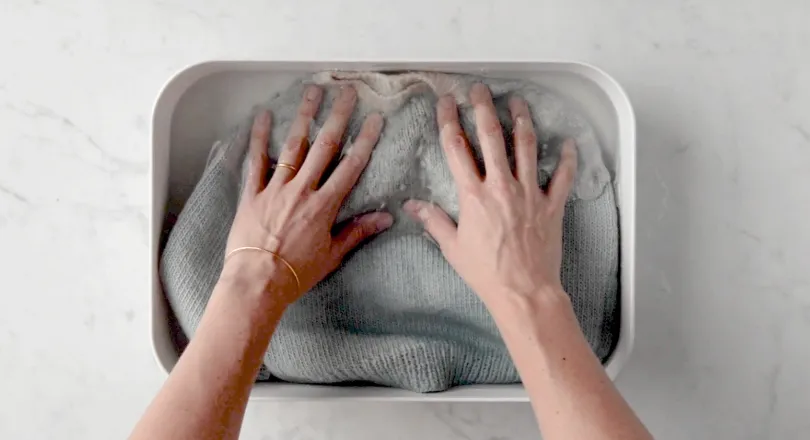
Rather than pinning and spraying the piece, submerge it in a bath of room temperature water. 

Remove to a clean towel and roll it to get out excess water.  Don't wring or twist the knitting while it is weak and wet!  Be gentle!  

Hand block the damp knitting to the desired size and pin it into place.  Let it dry thoroughly.