Provisional Cast-On Tutorial
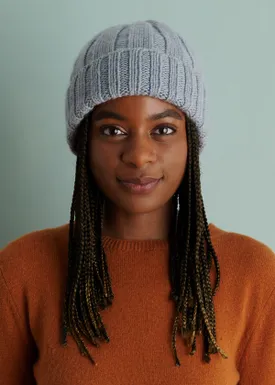
A provisional cast-on keeps cast-on stitches "live" so that they can be knit later. It's a very useful technique when you're not sure what kind of edging you'll want or how long to make something. With a provisional cast-on, you can make these decisions at the end of a project, allowing you to respond to the actual garment. I made this tutorial to go with my 70's Ski Hat Project Journal, the provisional cast-on is used to make a cashmere lining for the hat.
There are a few ways to make a provisional cast-on. This is my favorite...
- With some smooth waste yarn and a crochet hook, chain a few more stitches than you will be casting on. Cut the tail and pull it through the last stitch.
Examining the chain, the front side is made up of V's.

The back of the chain has bumps in it.

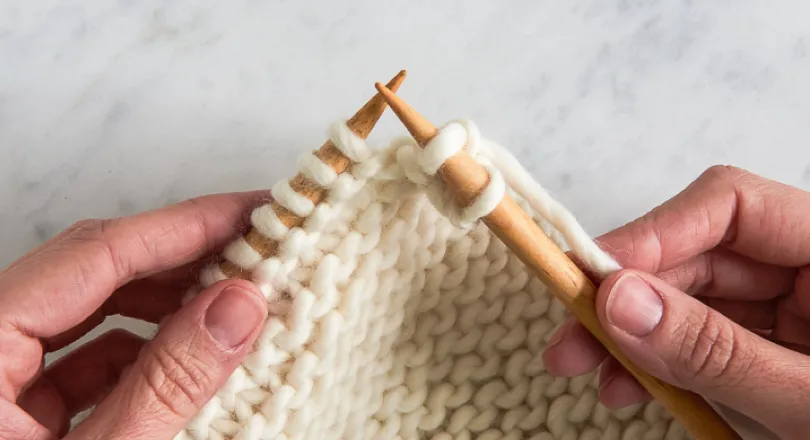
- Insert a knitting needle into each bump on the back of the chain, and pick up however many stitches you're casting on.


Then just knit!
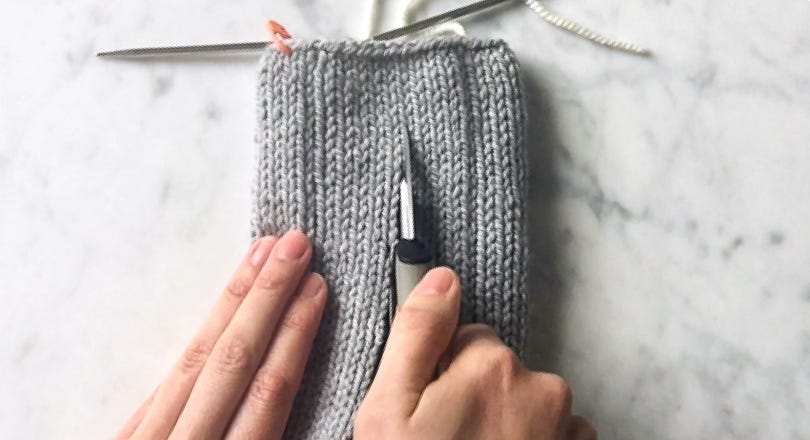
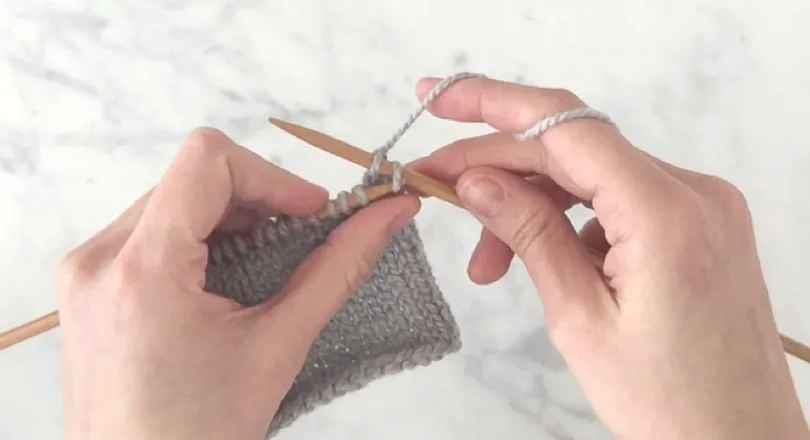
- When you're ready to use the cast on stitches, thread a knitting needle through the right side of each stitch. It's like weaving - over a strand, under a strand...

- Then remove the crocheted chain by untying the end and gently unraveling the whole chain.

You're ready to knit in the other direction!


December 10, 2007
Reader Comments (20)
Thanks for all the cool and useful tutorials!
Thank you!
I agree, the first stitch of the provisional cast on can be a little confusing! If you start by picking up the right "leg" of the first "V" and don't bother with what may feel like the first stitch (that loose strand you refer to), you should end up with the correct number of stitches.
It's so tricky to explain, so please let me know if this doesn't work for you, and I can try again!
Thanks for your question and good luck!
Whitney
Thanks so much for this. this is the best. BER
Thanks again :)
Heather
I want to add my thanks for this very helpful posting! I also have a question: how do you thread the needle through purl stitches? I made a provisional cast-on for knit 2/purl 3 ribbing.
Thank you!
Denise
You thread purl stitches the same way you do knit ones. Specifically, you find the right leg of the purl stitch and weave your needle under it. It's a little difficult to explain in words, but I hope this helps! Please let me know if you need more guidance, and I'd be happy to help!
Whitney
Yes, you can knit, purl or knit and purl the first row!
Thanks for asking!
Whitney
There are a few reasons to do a provisional cast on... Primarily it is used when you would like to leave your cast on edge live in order to either graft it to another edge or work in the oposite direction or add a specific detailing to it, etc. In the Everyday Linen Raglan (http://www.purlbee.com/everyday-linen-pullover/) it is used to do a hemmed edge without sewing for instance. -Laura
I'm open to other suggestions (if they're not TOO complicated!) if there's something that would work better.
Thanks so much--I've learned a lot already just by reading the tutorial and comments.
Janis
Yes, a Provisional Cast On is a great way to avoid a seam in your cowl! One word of warning is that if you are knitting a stitch pattern other than stockinette or garter, your Kitchener Stitch won't be invisible and you will, in effect, have a "seam". A good example of a cowl knit with a Provisional Cast on is our Striped Cotton Cowl, right here: http://www.purlbee.com/striped-cotton-cowl/2011/4/10/whits-knits-striped-cotton-cowl.html
By the way, another solution is to knit your cowl in the round with circular needles. Lots of our cowls are knit this way, for example our Garter Gaiter: http://www.purlbee.com/garter-gator/2012/12/6/garter-gaiter.html
I hope this is helpful information! Please let us know if you have any other questions and good luck!
Whitney
Yes, that's true. Like Kitchener Stitch, a Provisional Cast On works best with either stockinette or garter stitch. In the case of a Provisional Cast On, that is because to work in the opposite direction (or "upside down") you have to work a half-stitch over, as you say.
I don't know of a way around this problem, although I'm sure there's a knitting engineer out there who has come up with one!
Thanks for your question!
Whitney