Laura's Loop: Striped Stockinette Snake
After years of knitting for my nieces, I am thrilled to now be knitting for my very first nephew. As it turns out, a dear friend of mine, Natalie, also recently welcomed her first nephew, and like me, she wants to shower him with handsome hand-made treasures. It's been quite some time since Nat picked up her needles, and so she turned to me for some tech support and basic hand holding. Together we each knit up a Striped Stockinette Snake. For Natalie, it proved a very helpful reintroduction, and for both of us, it became the perfect present for our baby nephews!
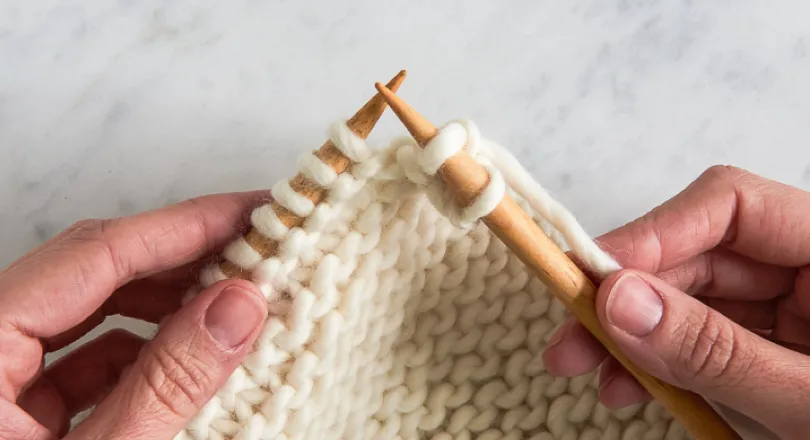
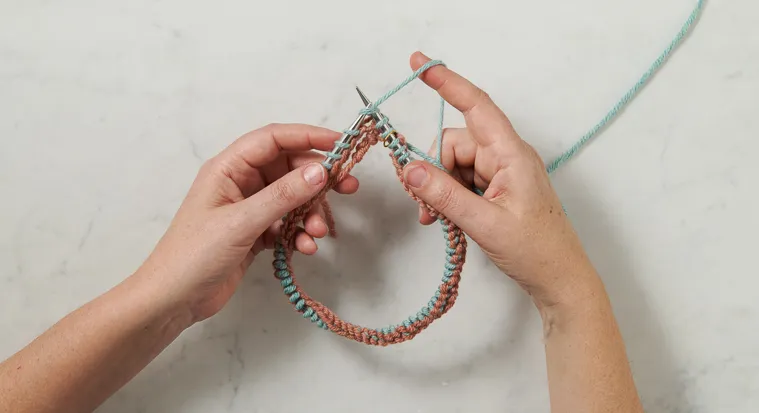
Along the way, we conquered the I-cord, learned how to increase and decrease both to the left and the right, and explored the characteristics of stockinette stitch. As seasoned knitters know, fabrics made out of stockinette stitch curl along the edges. Often stockinette is paired with another stitch pattern to keep the piece laying flat, but for our purposes here, the naturally curled edges are just what we needed! We were able to knit flat (rather than in the round) and still create a tubular, snake-like object. Pretty nifty!

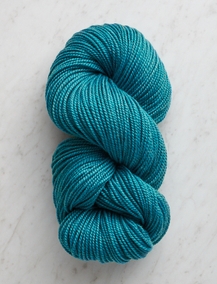
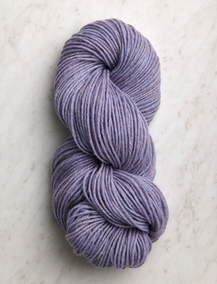
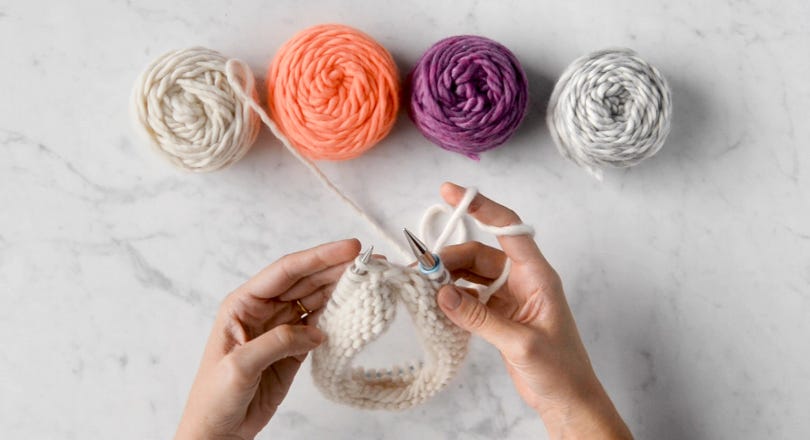
To add to some more snakiness I incorporated single-row striping, using two beautiful self-ombreing yarns, Cascade's alpaca-merino Eco Duo. With rows and rows of easy stripes, boredom never strikes as the two yarns fade in and out from darks to lights. It's nearly hypnotizing.
Whether it gets lovingly dragged around or slyly stacked on a shelf, this super simple Striped Stockinette Snake will slither its way into your dear little boy's (or girl's!) heart! -Zia (Aunt) Laura
The Materials
Makes two Striped Stockinette Snakes
- 1 skein of Cascade's Eco Duo. I used the color Chickory as color A.
- 1 skein of Cascade's Eco Duo. I used the color Zebra as color B.
- US #8, 8-inch, 12-inch or 16-inch circular needles or long double pointed needes
- 1 pack of Buttons. I used Small Buttons (3/8-inch, 2-hole, size 15) in color Black.
The Pattern
Gauge
5 stitches = 1 inch in stockinette stitch
Finished Dimension
68 inches long
Pattern Notes
During the stripped portion of this pattern, each row in this pattern starts with the instructions to either "Turn" or "Slide" the work:
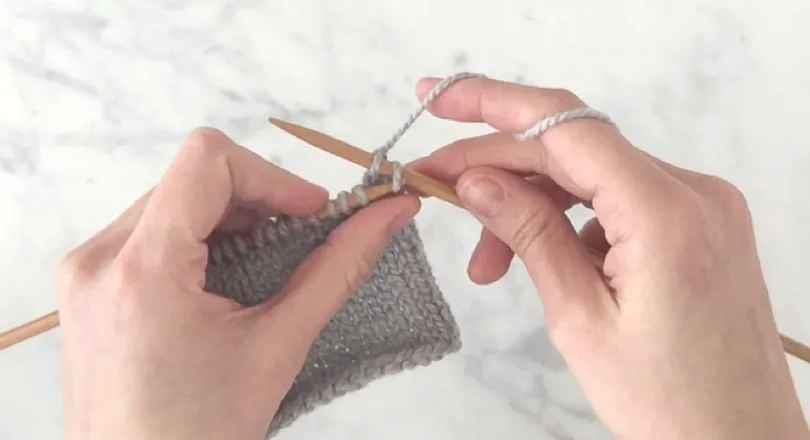
"Turning the work" means to do what you would normally do when knitting rows with a circular needle. That is to say, put the needle in your left hand into your right and the needle in your right hand into your left, and flip the work around so the opposite side is facing you.
"Sliding the work" means to keep the same side of the work facing you, and to push all the stitches to the right end of the circular needle. Without turning the work, start the new row as you normally would.
You will know that you're doing this right if the yarn you need to complete the next row is magically there waiting for you!
The Tail
The Body
Add the Stripe
Shaping the Head
The Mouth
The Eyes


August 16, 2012
Reader Comments (38)
You can get two snakes out of two skeins of Eco Duo (197 yards each) so each snake takes just under 200 yards. This pattern super easy to adjust to your yardage though. Once you've added the stripe and before you get to the head oof the snake you can go longer or shorter... whatever you'd like.
Let us know how it goes!
Laura
I totally understand. I like to read patterns first to make sure I know what I have ahead of me. With single row stripping however, it really is something that makes more sense when you have the needle and yarn in your hands.
Essentially, you will work one row with A and then you will want to make a strip with B, but B will still on the right side of the fabric (with right side facing), so you need to slide your work over to work with B. After you do that, both your yarns will be on the left side of the fabric (with right side facing) so at that point you'll have to turn your work. Then, once again you will work in A, but to work the following row in B, you'll have to slide... and on and on...
Try it out.
But let me know if you have any more questions.
Laura
this snake is so cute! What's the chance it could be used as a scarf-ish neck wrap by my mod 28 yr old niece? Too weird? Thanks,
Bonnie
Thanks!
Renee
The fattest part of the body only gets up to about 3 inches wide. And the head is only about 4 at most. You lose a lot of width to the curled edges.
Hope this helps.
Laura
The colors are listed under the Materials portion of the pattern. I used the colors Zebra and Chickory. Glad you like the pattern!
Thanks for writing in.
Laura
Oh no. It is a typo! Thank you so much. I will correct the pattern now.
Thanks again,
Laura
First of all, Thank you to share this great pattern with us!
I've just begun to knit it today and I have a question:
for the increases of the body: you repeat from ** 11 more times...
Do I have to repeat the 11 increase rows in succession or Do I have to repeat Rows 2-4 and rows 1-4 four more times after each Increase row?
Hope you understand my english... I'm french and it's difficult to explain in english!!!
Thanks
Great question. You do NOT repeat the Increase row in succession. You repeat Rows 2-4 and then 1-4 four more times after each Increase row. And your English is very good!
Thank you for writing us.
Laura
I am also an owner of a LYS and carry the eco-duo. I will have this snake as a sample with directions to your website for the pattern. Thanks again and best wishes! :)
Katie
Glad you like the pattern. Once you are down to 22 stitches, cut your yarn and thread it on to a tapestry needle. Rather than turning your work, keep the right side facing you. The yarn should be on the far left. With the threaded tapestry needle, bring the yarn through the live stitches on the needle. You can slip the needle out. Pull the yarn taut and weave in your tail. This will cinch the stitches into a little circle.
Hope this helps!
Thanks for writing in.
Laura
My son is a Herpetologist, what a wonderful gift! I cannot wait to see his face. He is so hard to find the right gift to give him, this will do it .
I have a comment about your web site. When the patterns are printed out they use so much paper and ink. Is there some way you can get it so we only do one photo and just the pattern in a smaller font. The snake took 17pgs and the golf covers took 19pgs. That is after I went to the print page. I do appreciate your web sight and that the patterns are free, but just thought you should know how much paper is being used.
Thank you for all the time and energy that goes into your web site.
Susan
Thank you for your kind words about the pattern.
We are aware of the printing issue and hope to address it in the future. In the meantime we recommend that copy and paste the text and pictures into a word or text doc and print from there.
Thanks for writing in!
Molly
After the first inch of i-cord, you work the remainder of the snake flat. The edges of stockinette stitch fabrics tend to roll and that is what is happening here. It looks like the snake is knit in the round, but really the edges are simply rolled under.
I hope this helps.
Let me know if you have any other questions.
Laura
That is correct.
You cannot use straight needle for this project.
Laura
The finished length of my snake was 68 inches. Once the piece measured 65 inches I began Shaping the Head.
You repeat from the Increase Row up to the Row of instructions that says to Repeat, In other words, you repeat all of the following 11 more times:
**Increase Row: Turn work, with A, K1, make 1 right (m1R), knit to last stitch, make 1 left (m1L), k1. (2 stitches increased)
Repeat Rows 2-4.
Repeat Rows 1-4 four more times.
Let me know if this isn't clear.
Hope you like the snake.
Laura
The good news is that since the edges curl under naturally, they won't be too obvious. But if you are like me, you'll want them to be nice and smooth anyway. You can simply bring them up the side or you can twist the previous row's yarn with the next row's yarn to carry it up more inconspicuously. Either way, what will make them most smooth is a consistant tension. Resist the urge to pull too tightly, this will make the edge bunch or gather.
Let me know if you have any other questions.
Thanks for writing in.
Laura
i have no idea what to do now! i have two needles (a circular needle) and can't just use both needles in the same hand or knit with the left needle because then every turned row would be left-handed knitting anyway.
HELP! how does knitting on the right needle with a second right needle work!? everything i've ever knitted goes from the left needle onto the right.